Photo of the Week: Watercraft and Ship Simulator Expedited Baltimore Harbor's Reopening
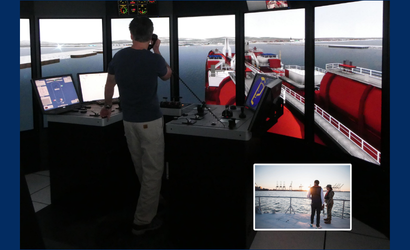
The Coastal and Hydraulics Laboratory's Watercraft and Ship Simulator uses high-fidelity simulation on 11 56-inch displays to test channel designs and improve vessel maneuverability and safety at major U.S. ports. It reduces transportation costs by optimizing navigation routes. Its rapid-response capability was demonstrated during the Francis Scott Key Bridge collapse in the Baltimore Harbor (inset). It delivered strategic guidance within 1.5 weeks, and a buoy realignment based on simulation data restored port traffic by 75% in two weeks. This helped reduce Baltimore's estimated daily losses from $15 million to under $5 million, providing swift economic relief to port stakeholders.
Photo Credit: U.S. Army Engineer Research and Development Center