Preparedness in Action: NIAID Science and Technology Transfer Support Urgent Bundibugyo Vaccine Research
By: Gelu Deobrescu, NIAID
Originally published in the July 2026 NIH Technology Transfer Community Newsletter.
The National Institute of Allergy and Infectious Diseases (NIAID) supported urgent vaccine research in Africa by being proactive instead of reactive. When Bundibugyo virus disease emerged as an urgent public health threat in the Democratic Republic of the Congo and Uganda, research conducted by NIAID years before the outbreak allowed authorities to respond swiftly.
In May 2026, the World Health Organization reported that no licensed vaccines or specific therapeutics were available for Bundibugyo virus disease and activated research and development efforts to advance potential medical solutions. The foundation for one promising vaccine began with NIAID scientists Andrea Marzi and Heinz Feldmann, who developed recombinant vesicular stomatitis virus-based Bundibugyo vaccine materials and the associated tools needed to generate a vaccine for evaluation.
Earlier work by Marzi, Feldmann, and collaborators helped show the value of this vaccine platform for filoviruses, the virus family that includes Ebola viruses (Bundibugyo virus is a member of the Ebola virus family, but it is distinct from other Ebola viruses that have received more vaccine-development attention). Those NIAID-developed materials later supported research at the University of Texas that reported protection in nonhuman primates against Bundibugyo.
As development interest accelerated during the current outbreak, NIAID's Technology Transfer and Intellectual Property Office (TTIPO) moved quickly to support responsible access to NIAID-developed biological materials. Working closely with Marzi and external development partners, TTIPO completed two license agreements within roughly 10 business days of receiving each request, near the end of May 2026.
The agreements were an important step in enabling urgently needed preclinical development work for vaccine candidates tailored to the current Bundibugyo outbreak. The two development partners have since announced public health funding from several groups, reflecting a broader coordinated response across government and nonprofit sectors.
The total effort of NIAID and its collaborators illustrates the public health value of preparedness. NIAID scientists developed Bundibugyo tools before they were urgently needed, and TTIPO helped move those tools into the hands of development partners when the need became immediate.
Together, NIAID research and technology transfer transformed years of scientific discovery into timely action.
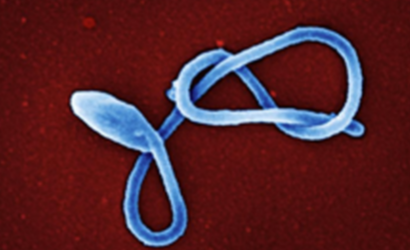
Photo: Colorized scanning electron micrograph of a single filamentous Ebola virus particle, shown in blue. Credit: NIAID.