VA Technology Transfer Program Creates Commercial Development Support Program
THE PROBLEM: For over a century, the Department of Veterans Affairs (VA) has supported the R&D of medical devices and therapeutics designed to improve veterans’ health and well-being. In recent years, the VA Technology Transfer Program (VA TTP) recognized the need to improve the licensing potential of VA-owned technologies. Leaders determined that establishing an internal commercial development initiative would improve the agency’s return on investment in its T2 portfolio and thereby reduce the time it takes to bring healthcare innovations to market.
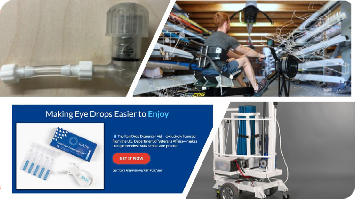
THE SOLUTION: The VA Technology Transfer Assistance Program (TTAP) connects VA innovators with the expert guidance, strategic funding, and resources they need to advance their early-stage inventions and reach market readiness. TTAP supports both VATTP and the internal VA Innovators Network by connecting inventors with engineers who design and create prototypes, perform design and cost analyses, and prepare technical documentation and patents. TTAP fosters medical innovation by improving manufacturability and reducing the costs of new technologies that show commercial potential, address veteran needs, and support the VA’s mission. Now active at VA sites in Cleveland, Minneapolis, and Pittsburgh, TTAP teams are establishing a universal workflow framework across all sites that will better define program operations, identify the materials required to use TTAP, and clarify what inventors can expect during the T2 process.
The Bringing Research Advancements for Veterans to Everyone (BRAVE) program, funded by the VA’s Office of Research and Development, provides eligible VA inventors with up to $100,000 to develop VA-owned or jointly owned intellectual property. It is designed to help bridge the “valley of death,” where promising technologies frequently stall due to a lack of resources. BRAVE funding supports prototype production and testing, clinical-grade prototypes, chemical synthesis, proof-of-concept studies, pharmacodynamic and pharmacokinetic testing, and clinical pilot studies to enable inventions to power through the valley of death and improve their commercialization prospects.
THE IMPACT: According to the VA TTP, VA technologies submitted to TTAP and BRAVE are 6% more likely to be successfully transferred, a significant increase that translates into improved care for veterans. At the time of publication, companies have licensed 19 TTAP and 11 BRAVE technologies and signed CRADAs for two TTAP technologies and one BRAVE technology. Additionally, two TTAP projects have been internally produced by the VA, and four have received additional VA grant funding to continue their progress to commercialization. Many of the projects funded by TTAP address veteran-centric issues such as limb loss and paralysis that are not as prevalent in the general population, meaning that it is often harder for those technologies to attract industrial and commercial partners to bring them to market. The BRAVE program has significantly benefited developers of higher-risk diagnostic, therapeutic, and clinical devices by funding pilot studies and proof-of-concept work that reduce uncertainty for potential investors and industry partners and help inventors be more competitive when applying for grant funding.
Click on any images below to view larger versions and photo captions.