Strategic Tech Transfer Turns Vaccine Innovation Into Global Health Solution
THE PROBLEM: Despite the critical role that vaccines play in global health, access to some of the most powerful ingredients is limited. Vaccines save millions of lives every year by protecting people against serious illness and death from preventable diseases. Efficacy is greatly improved by the inclusion of adjuvants, which help stimulate a stronger immune response in patients. Today, adjuvants are used in about half of the world’s vaccines. However, one of the most effective adjuvants, AS01, is restricted by its manufacturer to use in its own vaccines.
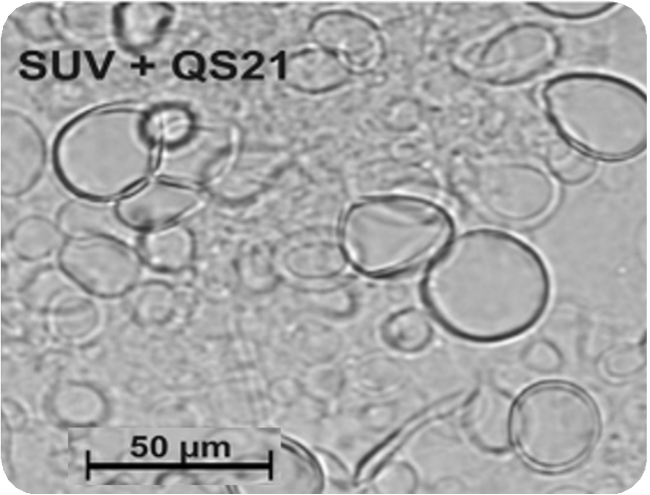
THE SOLUTION: Scientists at the Walter Reed Army Institute of Research (WRAIR) formulated and patented a new adjuvant called Army Liposome Formulation with QS21 (ALFQ) that can emulate and potentially even exceed the potency of AS01. Unlike AS01, ALFQ is made with more stable fat-based ingredients and contains a mix of small and large single-layer microscopic vesicles, ranging from nanometer scale to more than 30 microns in size. The issued patent supports the U.S. Army’s efforts to explore the development of novel vaccines with academic, government, and commercial partners for national defense. ALFQ also has “plug-and-play” versatility that allows it to be used in vaccines for countless diseases.
THE TECH TRANSFER MECHANISM: Over the past nine years, 140 requests have been initiated to enter into various types of agreements with WRAIR, resulting in:
- 42 nondisclosure agreements
- 36 CRADAs
- 32 material transfer agreements
- 10 CRADAs for clinical trials
- 10 research collaboration agreements
- 4 simple letters of agreement
- 3 memorandums of understanding
- 2 interagency agreements
- 1 commercial license agreement
THE TECH TRANSFER EXCELLENCE: The success of the Defense Health Agency Research & Development, Medical Research and Development Command Technology Transfer (T2) professionals in promoting ALFQ led to multiple collaborations and licensees, including an agreement with Pfizer that has been the most lucrative license to date. The T2 efforts maximized the value of the intellectual property by strategically securing patents in key global markets and bundling valuable technical and regulatory data into the licensing agreements, which significantly enhanced their attractiveness and overall value.
THE IMPACT: Ongoing research involving ALFQ is paving the way for the development of medical countermeasures for emerging and existing infectious diseases by the U.S. Army and outside partners. Six clinical trials in humans have been completed, five are active and five additional trials are in the pipeline. Preliminary data from the six completed Phase 1 trials with two malaria, HIV, Campylobacter, SARS-CoV-2 antigens showed that the ALFQ-adjuvanted vaccine was safe and well tolerated. Collaboration with the Henry M. Jackson Foundation for the Advancement of Military Medicine has led to the creation of SpFN-ALFQ, a next-generation coronavirus vaccine that may confer broader protection against a range of known and novel SARS-CoV-2 variants. A partnership between WRAIR and the U.S. Agency for International Development has led to the completion of two Phase I trials and one Phase Ib trial for two malaria vaccines. Commercially, Pfizer has achieved three clinical milestones for three different indications using ALFQ under a partially exclusive license that has generated significant royalty revenue that WRAIR is using to invest in R&D, reward scientists and inventors, and fund a community engagement program.
Click on any images below to view larger versions and photo captions.