Hydrogen Fuel Cell Technology Transfer Sets the Standard
Hydrogen fuel cells generate clean, efficient, and reliable electricity. That technology has evolved significantly over the years, and it now contributes heavily towards global decarbonization. However, technical limitations have constrained widespread adoption.
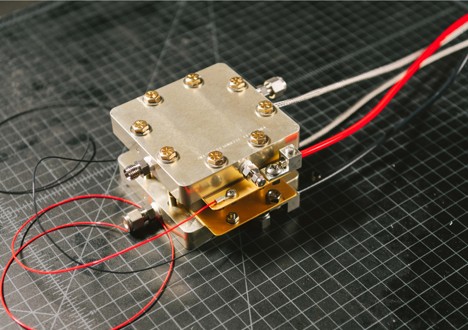
The Ion Pair Membrane Electrode Assembly (MEA), which is the core component inside a fuel cell that converts hydrogen into electricity, was developed at Los Alamos National Laboratory (LANL) and addresses some of these limitations by delivering greater energy output and efficiency while reducing weight, size, manufacturing costs, and reliance on expensive and harmful materials.
Building on that success, LANL began targeting industry sectors that remained hardest to electrify: marine, aviation, and portable power applications, where traditional batteries are often too heavy or bulky to supply enough power. To do so, LANL entered into an enhanced license agreement with Advent Technologies, a fuel cell technology company, granting Advent exclusive rights to the technology in specific sectors.
LANL scientists and Advent engineers developed the Ion Pair MEA specifically for those hard-to-electrify applications, while LANL retained non-exclusive rights to license the technology for other uses. LANL scientists and Advent engineers worked side-by-side to refine the technology’s design, test its performance, and explore commercial development pathways.
The long-standing partnership was first formalized under the Department of Energy (DOE) L’Innovator 1.0 program, designed to foster lab-to-market technology transfer. DOE support through the L’Innovator program facilitated the early collaboration between LANL and Advent, laying the groundwork for their continued research and development of the Ion Pair MEA design.
The agreement itself integrates flexible licensing, multi-sector commercialization, and collaborative innovation. By granting Advent exclusivity in the three hard-to-electrify sectors, the license provides a focused pathway for commercializing the technology in those markets. It also ensures focus and accountability, while maximizing societal benefit through LANL’s ability to widely deploy the Ion Pair MEA.
This transfer process — which spans invention, joint development, and enhanced licensing — exemplifies a creative, multi-pronged pathway to commercialization, making it a model of excellence that now serves as a template for future DOE-industry collaborations in clean energy innovation.
To date, nearly 2,000 Ion Pair MEAs have been shipped to the U.S. Army for use in the development and testing of Advent’s Honey Badger 50™ rugged, soldier-carried battery charger, designed to power radio and satellite communication gear, mobile surveillance systems, and other uses in rough environments.
Additionally, the aircraft manufacturer Stralis Aircraft has converted a light airplane to use the Ion Pair MEA for propulsion, and the first all-electric flight is projected for late 2026. Airbus has extended its Joint Development Agreement — a formal partnership in which two organizations collaborate directly on research and development — based on using Ion Pair technology for hydrogen-powered flight, as the MEAs continue to achieve milestone performance.
According to Advent, the Ion Pair MEA’s high power output and small size will also be attractive to the marine and aviation industries for propulsion, auxiliary power, and external power, while warfighters and first responders will benefit from its ability to significantly reduce carried battery loads by up to 70% for three-day missions.
No matter where this clean energy breakthrough goes, the technology transfer effort demonstrates a pathway for moving clean energy innovations toward commercialization in sectors that have historically been difficult to decarbonize. In doing so, LANL and Advent have established a model for laboratory-industry collaboration in clean energy innovation.
This technology received a 2026 FLC Excellence in Technology Transfer Award. Learn more here and discover more awardees in our Awards Gallery.
Click on any images below to view larger versions and photo captions.