NASA’s Unique Software Reduces Stress on Overburdened Pilots and Air Traffic Controllers
For much of 2025, a focus on air traffic controller (ATC) staffing shortages has dominated the political discourse around air travel. While leaders in Washington try to address issues around understaffed and overworked ATC, a technology invented by the National Aeronautics and Space Administration (NASA) is easing the burden.
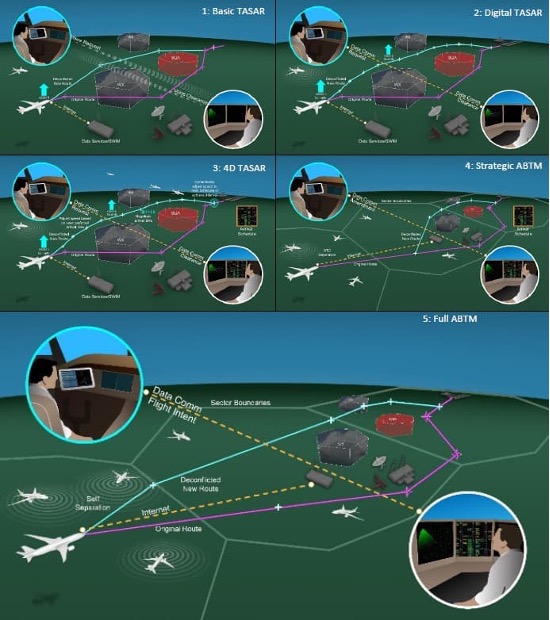
ATCs have a hard job, and they also are tasked with something many travelers don’t consider — ATCs are charged with approving or denying a flight operator’s desired changes during travel. An operator may want to change a flight path or altitude to improve flight time or fuel efficiency, but pilots have limited awareness of weather hazards, airplane traffic, or airspace restrictions off their original flight path. ATCs must assess various conditions and determine that they are safe before any flight changes can be approved. However, when ATCs deny pilots’ requests, it increases the workload for the flight operators, who have to create a new request and repeat the process, as well as for ATC, who have to analyze and decide on a response — all while the flight continues on a less efficient route. To combat this problem, NASA's Langley Research Center in Hampton, Virginia, developed new software.
The Traffic Aware Planner (TAP) software implements the Traffic Aware Strategic Aircrew Requests (TASAR) patented system that features a cockpit automation system that identifies optimal flight path improvements and displays them to the pilot. The changes are pre-checked for conflicts and wind-optimized, improving the odds that ATC will approve requested changes and reducing a repetitive workload for both sides.
The TAP technology originated from research on aircraft operational autonomy and enabling automation technology for cockpit-based trajectory management. It was developed for commercial release to bring NASA’s advanced airborne trajectory management technology to the aviation community for near-term adoption while laying the groundwork for increasingly autonomous operations in the future.
In 2016, TAP won NASA’s Software of the Year award, which helped it gain significant attention from the aviation community. Before their merger, Alaska Airlines and Virgin America both signed Space Act Agreements with NASA to test TAP. By involving industry in the process early, the NASA Langley team reduced the handoff effort needed to transfer it.
TAP has made a massive impact on the efficiency, cost, and climate impact of flying. One major U.S. airline said it has realized a 1.5% fuel savings – equivalent to 240,000 tons of reduction in CO2 emissions, $70 million in fuel cost savings, and nearly 16,000 hours of flight time saved — using TAP. The software is now licensed to APiJET, Basic Commerce & Industries, Delta Airlines, and General Electric, and has partners such as the Air Line Pilots Association, the Federal Aviation Administration, GE, the National Air Traffic Controllers Association, the National Oceanic and Atmospheric Administration, and Boeing.
According to simulations, TASAR helps the requests to ATC that would likely be rejected from about 23% to 6–8%. If the top 10 domestic airline operations used APiJET’s TAP and TASAR solution, it could save about $800 million and 6.7 billion pounds of CO2, according to estimations.
NASA’s TAP software and TASAR system are a boon to the aviation industry, reducing unnecessary stress on flight operators and ATC alike, especially in a time when staffing issues are already making an impact and creating a real perception that flying in the United States is more dangerous than it needs to be.
This technology received the 2025 Impact Award. Learn more here and discover more awardees in our Awards Gallery.
Click on any images below to view larger versions and photo captions.