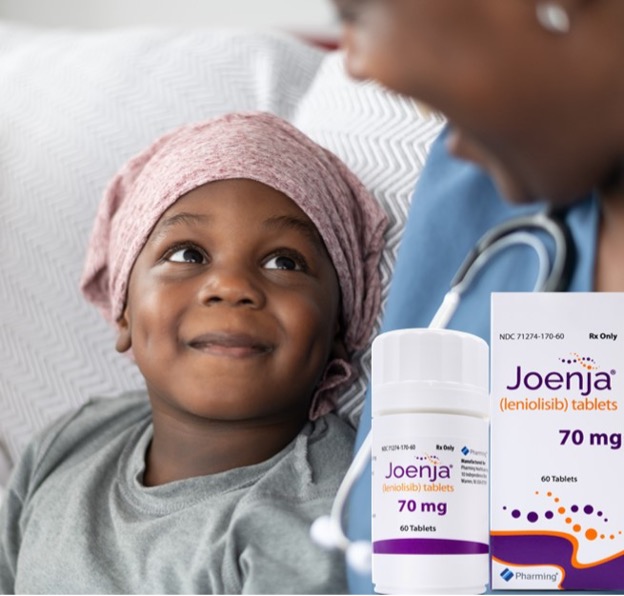
Joenja: A First-of-Its-Kind Treatment for PASLI/APDS
Activated PI3K-delta syndrome, or APDS, is a rare genetic disorder that impairs the immune system by affecting the development and function of white blood cells, which help the body fight infections and invaders. Certain types of B cells and T cells — the cells that recognize and attack viruses and bacteria — are often lower in people with APDS.
Symptoms of APDS include recurrent infections in the sinuses, ears, and respiratory tract, enlarged lymph nodes, tonsils, and other organs essential to a healthy airway and gastrointestinal tract, and an increased susceptibility to blood cell cancers like lymphoma.
The disease is also known as p110 delta-activating mutation causing senescent T cells, lymphadenopathy and immunodeficiency (PASLI) disease. The only known cure to PASLI/APDS is a bone marrow transplant, and previously, treatment options were limited to a regimen heavy on antibody replacement therapy and infection-targeting drugs.
In 2013, researchers at the National Institute of Allergy and Infectious Disease (NIAID) within the National Institutes of Health (NIH) identified APDS. They soon discovered that patients have a common gene variation that causes the gene’s pathway to become hyperactive, which led to the development of a medication that controls that pathway.
It would be 10 more years before NIAID researchers led Phase III studies of the disease that ultimately prompted the Food and Drug Administration (FDA) to approve leniolisib tablets as the first treatment for APDS in patients 12 years or older.
The technology transfer of leniolisib — known commercially as Joenja — has, like many drug discoveries, a long history. In 2015, NIAID entered into a Cooperative Research and Development Agreement (CRADA) with Novartis to assess the safety and efficacy of leniolisib as a treatment for APDS in a clinical trial setting. In 2017, Novartis synthesized leniolisib to target APDS at the source instead of just treating the symptoms.
After the Novartis trials produced positive results, the team launched a Phase III clinical trial and an extension study to test the drug’s long-term safety and efficacy in APDS patients. Then, in 2019, Pharming Group NV acquired exclusive rights to develop and commercialize the medicine that became Joenja.
The original CRADA was amended at that time to establish Pharming as NIAID’s new collaborator for the trial. In 2023, after the NIAID team completed the crucial Phase III trial, Joenja was officially approved for full use by the FDA.
The Technology Transfer and Intellectual Property Office at NIAID worked tirelessly with multiple internal and external partners to amend the CRADA a total of 10 times, modifying the original research plan, adding extension studies, and securing additional funding to get Joenja across the finish line.
Ultimately, the tech transfer process included significant R&D data transmission and ensuring development techniques were viable for commercial-scale production that maintained the quality, safety, and efficacy demonstrated in clinical trials — necessary for regulatory compliance and for meeting Current Good Manufacturing Practices.
Collaboration between the NIAID and Novartis, and then Pharming, led to the breakthrough medication’s approval and relief for many patients suffering from APDS. Joenja works by inhibiting the signaling pathways that dysregulate B and T cells and reducing hyperactivity that can lead to APDS. The drug has proven especially effective in two ways.
First, the average size reduction of APDS patients’ swollen lymph nodes in clinical trials was 46%. Second, those functioning B cells returned to normal levels within four weeks. Additionally, patients averaged a 27% size decrease in their enlarged spleens, which can stop filtering out infections from the blood when distended.
APDS is an extremely rare disease, with estimations hovering around 500 diagnosed patients in the United States. Because rare diseases often receive less private-sector investment due to limited commercial markets, sustained federal research is essential to advancing therapies and bringing patients hope. The good work of researchers at NIAID and their commercial partners has ensured that patients will have an avenue of relief for many major symptoms.
At the time of this writing, Pharming is investigating the safety and efficacy of leniolisib to treat APDS in patients under the age of 12, though the FDA has not yet approved expanded use for younger patients.
This technology received the 2024 FLC Award for Excellence in Technology Transfer. Learn more here and discover more awardees in our Awards Gallery.
Click on any images below to view larger versions and photo captions.