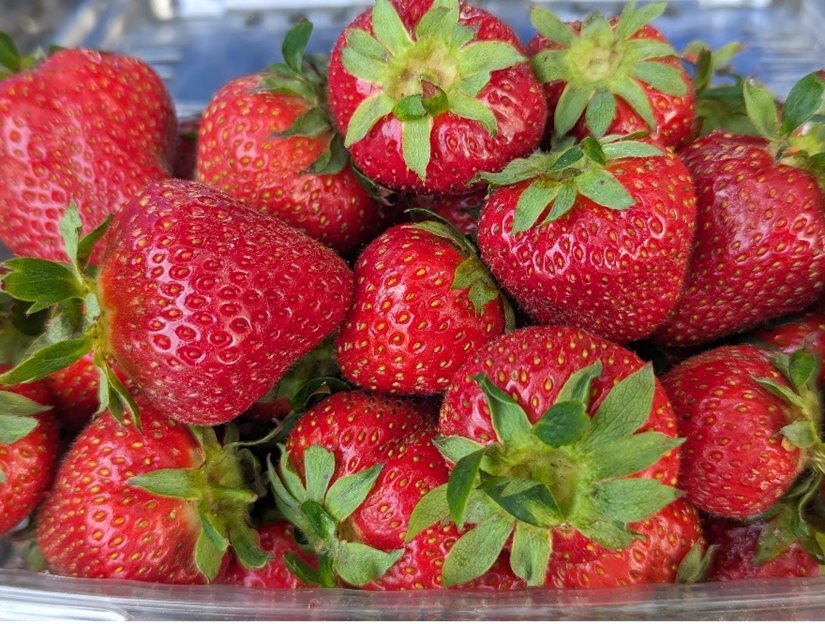
USDA’s Agricultural Research Service Solves the Strawberry
Everyone loves a good, juicy strawberry. But growers face the scourge of insects, diseases, and short growing seasons, not to mention the general difficulty of harvesting and transporting their crops. And, once they get into a consumer’s hands, some varieties tend to disintegrate quickly, even when properly stored.
The Agricultural Research Service (ARS) of the U.S. Department of Agriculture (USDA) has a history of improving strawberries as far back as the 1910s. In the 1930s, the ARS was producing varieties of the popular fruit that could survive a devastating root-rotting disease. Since then, the laboratory has released dozens of other strawberry cultivars, or cultivated varieties – including Keepsake, released in 2019.
The ARS Genetic Improvement of Fruits and Vegetables Laboratory bred the Keepsake variety specifically to have an improved shelf life. The magic of the technology lies in making the variety firm enough to handle during harvesting and packaging, as well as ensuring they thrive in cold storage.
ARS scientists engineered Keepsake strawberries to be harvested as early as May and, importantly, to be resistant to one of the most serious plagues in the fruit-growing world, anthracnose fruit rot. This technology was produced through meticulous breeding and selection processes covered by a U.S. Plant Patent and trialed under numerous agreements around the country. The resulting cultivar has been licensed to multiple parties in the U.S. and Canada.
The process began in 2007, when researchers Kim Lewers and John Enns – then at the ARS – started observing and replicating the plants; the final selection was commercialized in 2014. Plant propagation and evaluation agreements were signed with Lassen Canyon, a nursery located in California, allowing potential licensees to grow and test what would become the Keepsake in field trials.
After two growing seasons, Keepsake received additional positive ratings, leading to a U.S. Plant Patent application being filed in 2018. First sales occurred in 2020, with more than 2 million plants being sold by May of that year. As of October 2024, about 3 million plants of Keepsake have been sold.
Keepsake has consistently shown high yields and low field rot – music to the ears of those in the industry – even without fumigation or fungicides. Keepsake strawberries are described as attractive, good-sized, juicy, and sweet. In other words, everything a consumer could want in a strawberry!
Specifically, Keepsake performs well in the Mid-Atlantic and Northeast areas of the United States. Studies have shown that Keepsake strawberries resist degradation and decay better than other varieties, leading to a longer shelf life, less waste, and more fruit for the dollar. And, maybe most importantly, Keepsake can help address global food challenges by producing a more shelf-stable strawberry that reduces waste — especially as the United Nations Food and Agriculture Organization projects that global food and feed production will need to increase by 70% by 2050, with 1.3 billion tons of food currently wasted or lost each year.
Next time you buy fruit at your local U-Pick farm, look for Keepsake strawberries. According to the ARS and several years of testing, you will be thrilled with the size, taste, and quality of the fruit, and impressed by the lack of rot after purchase, transport, and a couple of days in the refrigerator!
Click on any images below to view larger versions and photo captions.