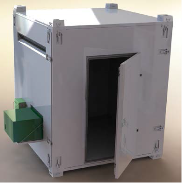
Army DEVCOM Soldier Center’s Flexible Modular Building Solution
After the peak of the COVID-19 pandemic, medical professionals around the world were still tasked with triaging and testing symptomatic patients. Some were set up in makeshift shelters in clinic parking lots to keep the spread of the infection to a minimum around other high-risk patients attending their normal check-ups.
Scientists at the U.S. Army Combat Capabilities Development Command (DEVCOM) Soldier Center have invented and prototyped a modular shelter structure, or MSS, that two people can erect in 10 to 15 minutes without tools. This type of technological advancement could serve several purposes, including as a makeshift pandemic response location or mobile infirmary, testing center, or triage unit.
The MSS can be erected on uneven or rough terrain and is designed to endure the elements. Components are stackable for easy transport, and the system provides power and climate control.
To erect an MSS unit, which contains six 7-by-7-foot panels and four leveling legs, assemblers drop wall panels into the floor panel’s channels and pan-latches secure the walls to the floor. One wall accommodates a 110-volt AC power source and an air conditioning unit. The MSS prototype was optimized with fiberglass skins over a lightweight polyfoam core.
Each MSS unit can be enlarged horizontally or stacked two high. The customizable sizing and the ease of transporting via truck or airdrop on standard pallets are selling points.
The MSS system is designed to withstand rough terrain and severe weather, including high winds. This makes them a perfect solution for military deployment in difficult extraction situations. But it is in the commercial sector where we will really see the MSS technology expand to meet unique needs.
Commercial uses can include emergency and disaster response, industrial warehousing, remote project sites, and infrastructure support. Construction sites could utilize the MSS technology for office spaces, or emergency crews could build MSS units for temporary housing in disaster-stricken areas.
Like in the pandemic example, an MSS could replace hastily-erected tents for medical testing, offering the workers a higher level of comfort while maintaining the distancing required to keep the rest of the patient populations safe.
We have only scratched the surface of MSS use cases and will likely see it expand even more as industry partners further the innovation to meet their customers’ needs.
Click on any images below to view larger versions and photo captions.